
Finally—letters in Scroll 4!
A high-resolution scan reveals ink in PHerc. 1667

After almost two years of staring at 8 µm renders of PHerc. 1667 (Scroll 4) with zero evidence of letters, we decided to apply what we’ve learned over the past months about optimizing the scanning protocol.
In early December we brought PHerc. 1667 to the ESRF synchrotron (BM18 beamline) in Grenoble and acquired a new tomographic volume with:
2.4 µm pixel size (over 3× finer than the previous scan),
78 keV mean incident energy,
22 cm sample-to-detector propagation distance.
As soon as the new volume reached our servers, we registered it to the earlier 8 µm scan. That registration transform let us map the coordinates of papyrus we had already virtually unwrapped in the old volume onto the new one—so we could immediately “re-unwrap” those same regions at higher resolution.
Next, we ran the high-resolution renders through the generalist ink-detection model trained on fragments PHerc. 500P2, PHerc. 343P, and PHerc. 9B. And this time, with great joy, we watched 5-6 mm sized letters start to jump off the screen. Finally!
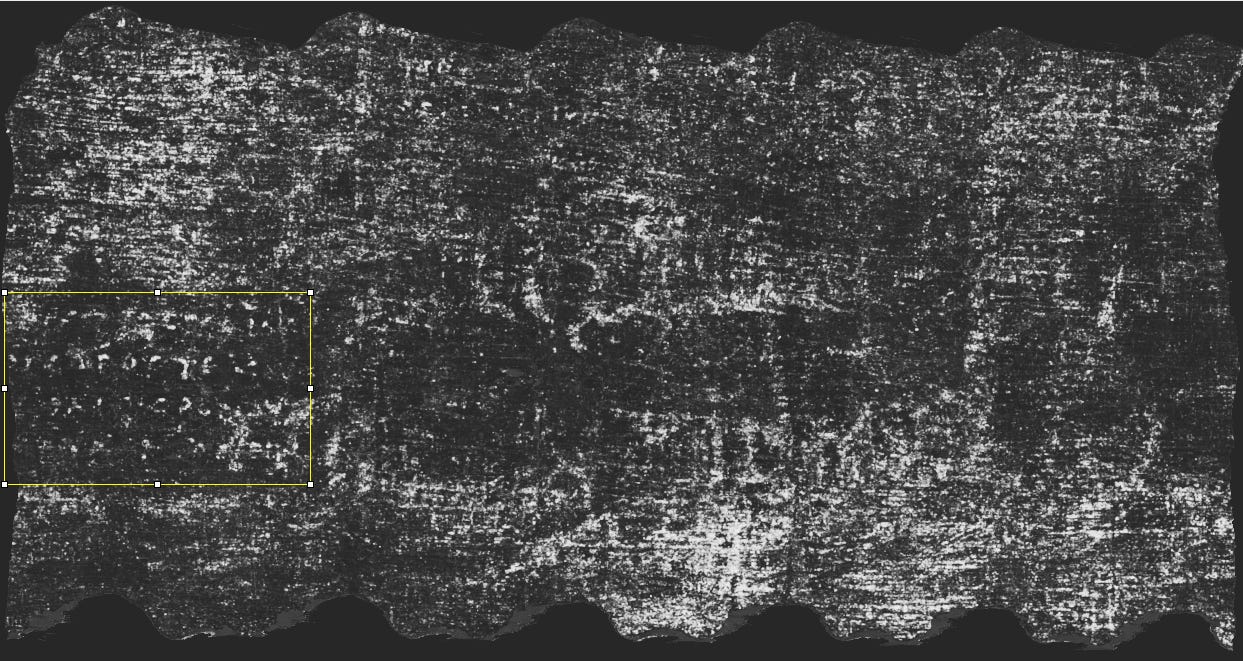
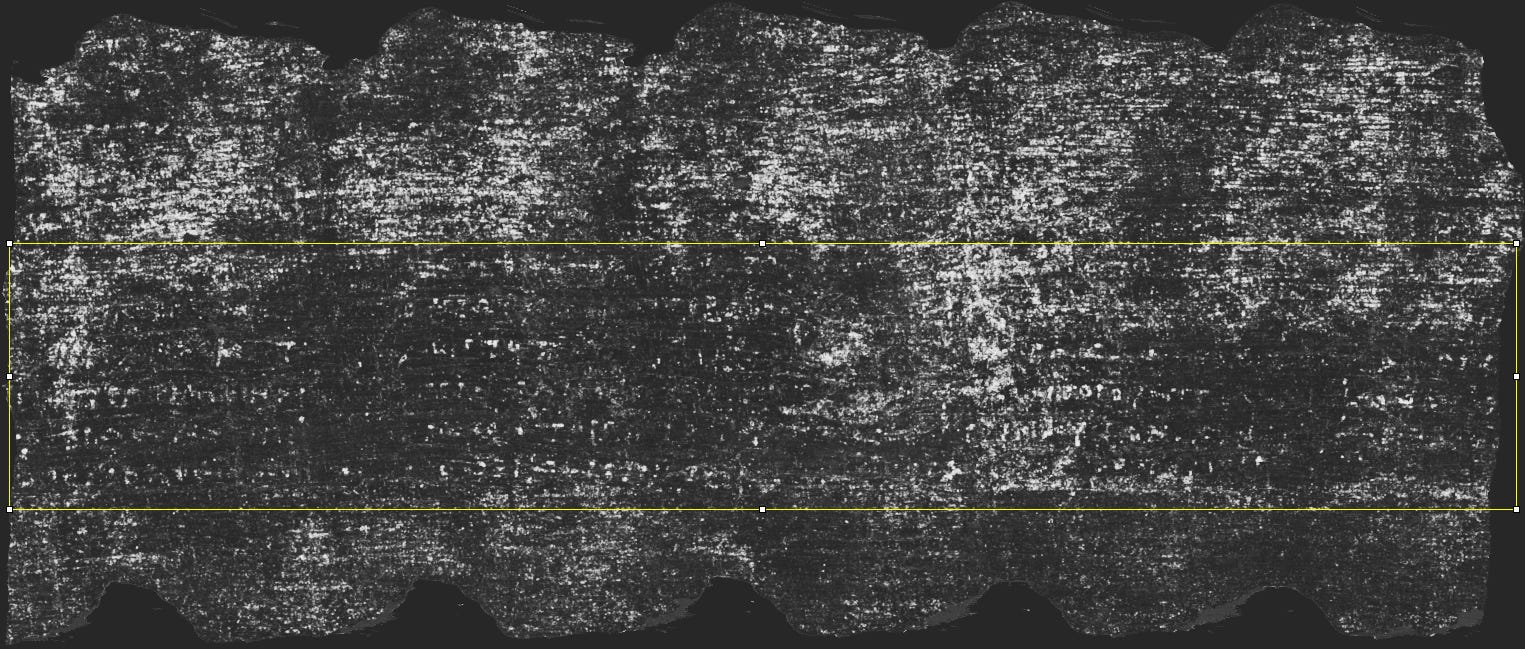
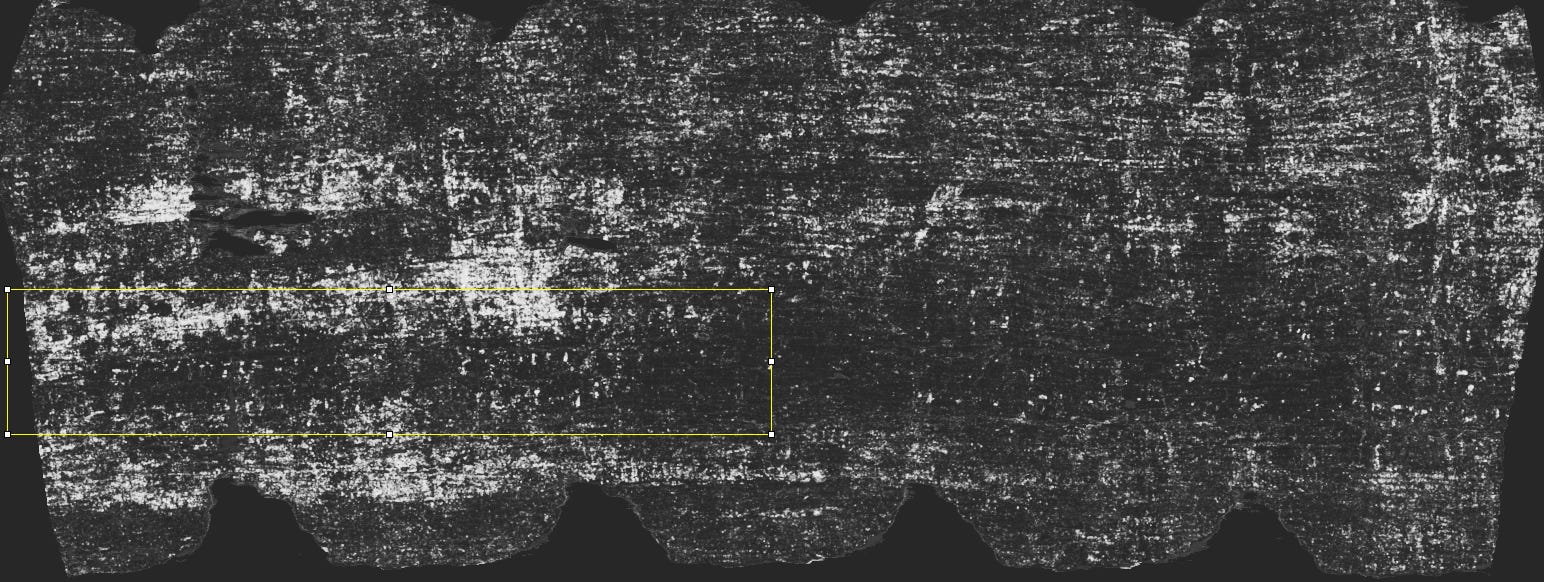
What makes this even more remarkable is that we’ve done no iterative, scroll-specific labeling on these newly revealed letters. These results confirm our vision: these scrolls are full of ink, and we’re on the right track toward a robust recipe for extracting text from any scroll.
Now the team’s focus is to extract as much text as possible from PHerc. 1667. For that reason, we are retiring the First Letters Prize and the First Title Prize for PHerc. 1667 (Scroll 4).
Kaggle competition pool prize doubled!
As mentioned in our latest post, we’re hosting a Kaggle competition to detect the papyrus surface in the scans. If you work in computer vision (or you’re just curious and want to contribute), we’d love to see what you build.
Thanks to our generous donors, we’re thrilled to announce that we are doubling the prize pool to a total of $200,000!
Updated prize ladder:
1st place: $60,000
2nd place: $40,000
3rd place: $30,000
4th place: $20,000
5th place: $15,000
6th place: $10,000
7th place: $10,000
8th place: $5,000
9th place: $5,000
10th place: $5,000
We’re also working full time on an updated dataset for the Kaggle competition that fixes several topological issues. We’ll share it as soon as it’s ready. Thank you for staying with us on this journey—and for helping us read these scrolls! 🙏
Merry Christmas, and a happy New Year from the Vesuvius Challenge team.
That’s fantastic news. Congratulations!
That's great news!
For the high-res volume 4 (2.4 µm pixel size), can we access the data via ash2txt, or is the Kaggle competition dataset all that is currently available?